Materials chemist.
Low carbon construction: Sustainable construction materials
Circular materials chemistry: Circular economy
I work on transforming industrial waste streams — particularly Flue Gas Desulfurization gypsum from coal-fired power plants — into low-carbon binders, composite cements, and high-performance construction materials.
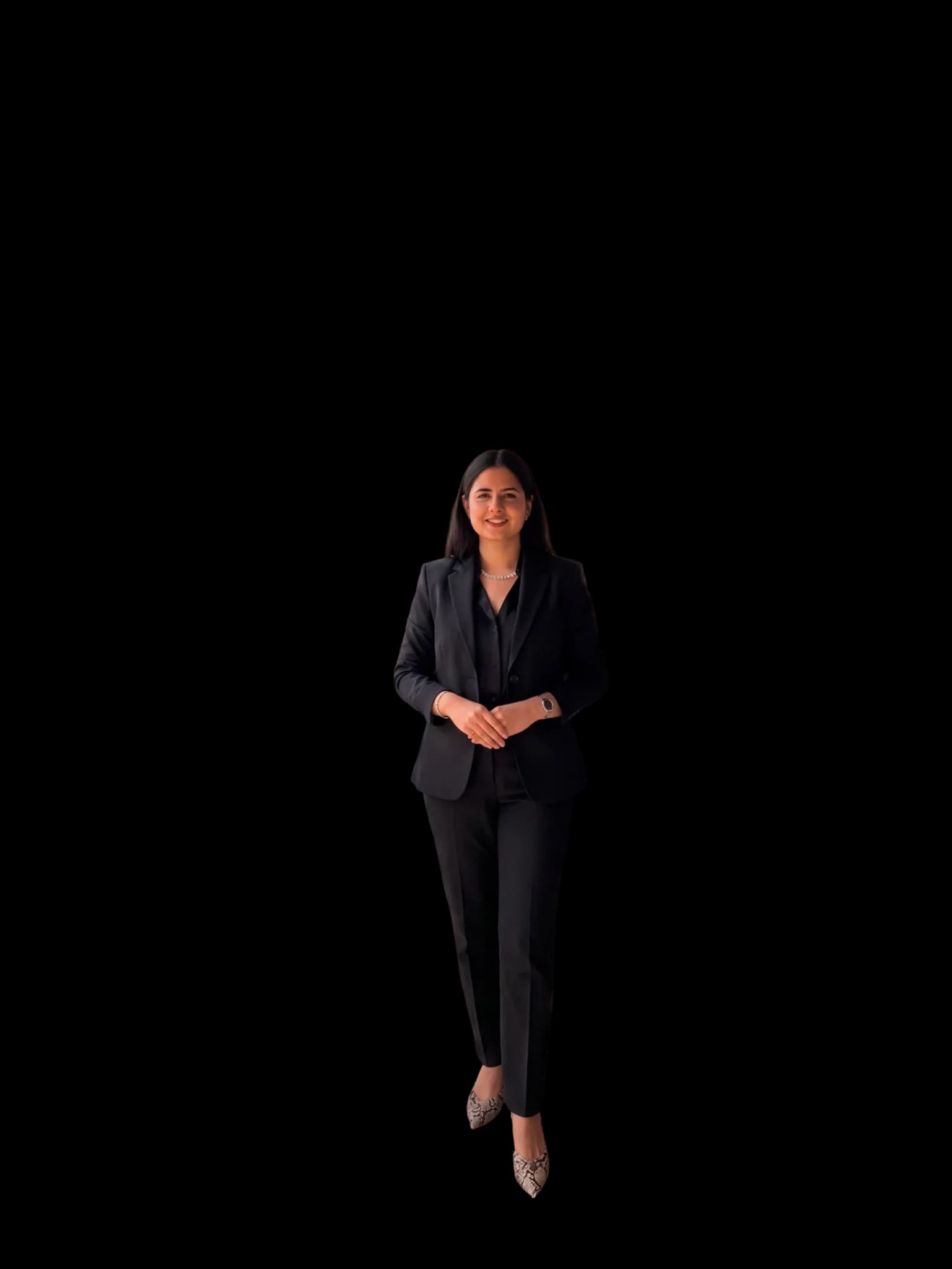
Hello! I am a chemist, and I work on the materials inside the buildings around you.
Specifically, I work on what should be inside them instead of what currently is. The cement industry alone produces around eight percent of the world's carbon emissions, and the construction sector here in the Gulf is one of the most ambitious on Earth. Those two facts have to be reconciled, and the reconciliation has to happen at the level of the materials themselves — at the level of the molecules, the binders, the aggregates that hold our walls and our cities together.
That is the work I have spent the last four years on, and the work I'd like to spend the next phase of my career on here in the UAE.
My research lies at the intersection of materials chemistry, sustainability, Life cycle assessment, and the circular economy. I work on transforming industrial waste streams — particularly Flue Gas Desulfurization (FGD) gypsum from coal-fired power plants — into low-carbon composite binders, chemical additives and high-performance construction materials.
The technical work spans three layers. At the molecular scale, I synthesize and characterize new binder phases using XRD, FTIR, SEM-EDS, TGA, and XPS. At the material scale, I evaluate mechanical strength, durability, water resistance, fire resistance, and acoustic performance. At the systems scale, I quantify environmental impact through cradle-to-gate and cradle-to-grave Life Cycle Assessments using openLCA, and increasingly through Python-based ML models for mix optimization and performance prediction.
The four material systems I developed during my doctorate — GVP3, P4, CB4, and CSW — are detailed below.
To turn the construction sector's waste streams into its raw materials. Every tonne of FGD gypsum that becomes a binder is a tonne not stockpiled. Every kilogram of cement displaced by a composite binder is a kilogram of carbon not emitted.
I want this transition to be evidence-based, not aesthetic. That means rigorous characterization, full lifecycle quantification, and durability testing under the conditions the material will actually face — including the chloride ingress, carbonation, and heat-humidity cycling that define construction in the Gulf.
Circular materials chemistry as the default, not the exception. A construction sector where the question "what waste stream does this come from" is asked before "what virgin resource does this require." A research culture where industrial collaboration, lifecycle thinking, and AI-assisted material design are integrated from day one rather than bolted on at the end.
The Gulf is uniquely positioned to lead this transition. The infrastructure pipeline is large, the policy will is real, and the climate constraints are unforgiving — which is exactly the pressure that drives genuine innovation in materials.
Twelve years across four cities. The path that led from a Life Sciences classroom in Delhi to a chemistry lab in Dubai.
Twelve years across four cities. The path that led from a Life Sciences classroom in Delhi to a chemistry lab in Dubai.
I started out in Life Sciences at the University of Delhi in 2014 — a broad interdisciplinary program covering biology, biochemistry, and microbiology. Chemistry kept pulling me sideways. By the time I finished my B.Sc. in 2017, I knew I wanted to spend the next stage in applied chemistry.
My M.Sc. at Amity University Noida turned out to be the formative period. My thesis there was on polymeric transdermal patches for the topical treatment of cracked heels — a small, applied, useful project, but the underlying intellectual move was the one that has defined my work since: take a material people have written off, and ask what else it can do.
I joined CSIR–Central Building Research Institute in Roorkee in 2021 as a Project Associate, working on high-strength plasters from FGD gypsum and fly ash in collaboration with NTPC, India's largest power utility. That collaboration taught me how research becomes deployment. By late 2021 the four-year doctoral arc had begun. The doctorate itself, completed in February 2026 at AcSIR with a CGPA of 9.57/10, gave me the time and resources to develop four distinct material systems and publish seven peer-reviewed papers. It also gave me eighteen months of teaching at AcSIR — the part of academic life I love most.
I moved to Dubai in early 2026, and that is where the next chapter begins.
I started out in Life Sciences at the University of Delhi in 2014 — a broad interdisciplinary program covering biology, biochemistry, and microbiology. Chemistry kept pulling me sideways. By the time I finished my B.Sc. in 2017, I knew I wanted to spend the next stage in applied chemistry.
My M.Sc. at Amity University Noida turned out to be the formative period. My thesis there was on polymeric transdermal patches for the topical treatment of cracked heels — a small, applied, useful project, but the underlying intellectual move was the one that has defined my work since: take a material people have written off, and ask what else it can do.
I joined CSIR–Central Building Research Institute in Roorkee in 2021 as a Project Associate, working on high-strength plasters from FGD gypsum and fly ash in collaboration with NTPC, India's largest power utility. That collaboration taught me how research becomes deployment. By late 2021 the four-year doctoral arc had begun. The doctorate itself, completed in February 2026 at AcSIR with a CGPA of 9.57/10, gave me the time and resources to develop four distinct material systems and publish seven peer-reviewed papers. It also gave me eighteen months of teaching at AcSIR — the part of academic life I love most.
I moved to Dubai in early 2026, and that is where the next chapter begins.
Flue Gas Desulfurization gypsum is what's left over when coal-fired power plants scrub sulfur dioxide from their emissions. It's a fine white powder, chemically near-identical to natural gypsum, and India alone produces millions of tonnes of it every year. Most of it sits in stockpiles. Some of it is dumped. For four years, I worked on giving it use cases — not just one, but four.
The first system was the simplest in concept and the most underestimated in impact: a lightweight plaster that combines vermiculite with FGD gypsum. The result is a wall finish that absorbs sound, resists fire, and weighs less than conventional alternatives — three properties that matter enormously in dense urban construction.
Gypsum has one persistent flaw: water sensitivity. For decades it has been excluded from external and load-bearing applications for this reason alone. P4 is a composite binder I developed using FGD gypsum and fly ash that maintains structural performance under moisture exposure.
CB4 is a hybrid binder of ordinary Portland cement, ground granulated blast-furnace slag, and β-hemihydrate gypsum. The full life cycle assessment, conducted in openLCA, showed lower environmental impact than conventional OPC in every measured category — climate, energy, water.
Calcium sulfate whiskers are needle-like crystals synthesized from FGD gypsum through controlled acidification. At a dosage of just one percent, they densify the matrix of cementitious systems and substantially improve flexural performance. The 2024 paper on CSW has become my most-cited work.
Seven peer-reviewed publications, 2023–2026.
Three peer-reviewed conference contributions to date, including international symposia at IIT Roorkee and at the National Council for Cement and Building Materials.
Between August 2024 and December 2025, I served as Adjunct Faculty at the Academy of Scientific and Innovative Research, teaching Research Publication and Ethics to M.Tech students and Introduction to Polymer Materials to first-year Ph.D. students. I designed the curriculum and assessment framework for advanced analytical techniques, aligning course materials with departmental learning outcomes.
Across the doctoral period, I mentored five students — two M.Tech, three B.Sc. — through six-month research internships in advanced analytical instrumentation (FTIR, SEM, XRD). All five completed their theses successfully, and three became co-authors on peer-reviewed publications.
Teaching is not a footnote in my work. It's how I learned to defend an idea.
UV-Vis (Shimadzu) · FTIR (Bruker) · XRD (Bruker/Rigaku) · TGA-DTA (Rigaku) · SEM-EDS · TEM · XPS · AAS · UTM · CTM · Bomb Calorimeter · Zetasizer (Malvern)
openLCA (cradle-to-gate, comparative LCA) · carbon footprint and energy modeling · Origin Pro · ImageJ · Design of Experiment · X'Pert HighScore · PowDLL
Python · supervised and unsupervised learning · feature engineering · model evaluation · mix optimization · performance prediction · large dataset handling for materials and environmental analysis
The UAE has committed to Net Zero by 2050. Saudi Arabia is building cities from the ground up. Across the GCC, the construction sector is the most ambitious on Earth — and the most exposed to the climate cost of cement.
My research speaks directly to the Gulf's hardest material constraints: chloride ingress, carbonation, and durability under sustained heat and humidity. The four binder systems I've developed are not theoretical — they are characterized, published, lifecycle-assessed, and ready to leave the lab.
I'm in Dubai. I'd like to put them to work here.
Three supervisors guided my doctoral research at CSIR-Central Building Research Institute. Their reference letters are available on request. What follows is what they have said about my work in their own words.
Three supervisors guided my doctoral research at CSIR-Central Building Research Institute. Their reference letters are available on request. What follows is what they have said about my work in their own words.
Aakriti is still an early career researcher, but she has consistently demonstrated a level of dedication, maturity, and scientific discipline beyond that stage. I have witnessed her take strong ownership of her Ph.D. research on FGD gypsum utilization, chemical additives, and sustainable composite binders. It has been a pleasure to guide her because she is the kind of researcher who works with sincerity, persistence, and a clear sense of purpose. She delivers high-quality work with both scientific relevance and societal impact, particularly in the areas of industrial waste valorization, circular economy, and low-carbon construction materials. Her strengths lie in experimental planning, materials characterization, scientific writing, and her ability to connect research outcomes with real-world applications.
Aakriti is still an early career researcher, but she has consistently demonstrated a level of dedication, maturity, and scientific discipline beyond that stage. I have witnessed her take strong ownership of her Ph.D. research on FGD gypsum utilization, chemical additives, and sustainable composite binders. It has been a pleasure to guide her because she is the kind of researcher who works with sincerity, persistence, and a clear sense of purpose. She delivers high-quality work with both scientific relevance and societal impact, particularly in the areas of industrial waste valorization, circular economy, and low-carbon construction materials. Her strengths lie in experimental planning, materials characterization, scientific writing, and her ability to connect research outcomes with real-world applications.
Aakriti has shown remarkable commitment and maturity throughout her doctoral research. As her co-guide, I observed her developing into a focused and capable researcher with a strong understanding of materials chemistry, binder development, and sustainable construction technologies. Working with Aakriti has always been a pleasure because of her positive personality, respectful nature, and sincere motivation to go the extra mile in producing transparent, high-quality research with strong practical relevance. She approaches research problems systematically and is always willing to refine her work through discussion, experimentation, and critical feedback.
Aakriti has shown remarkable commitment and maturity throughout her doctoral research. As her co-guide, I observed her developing into a focused and capable researcher with a strong understanding of materials chemistry, binder development, and sustainable construction technologies. Working with Aakriti has always been a pleasure because of her positive personality, respectful nature, and sincere motivation to go the extra mile in producing transparent, high-quality research with strong practical relevance. She approaches research problems systematically and is always willing to refine her work through discussion, experimentation, and critical feedback.
Aakriti is a motivated researcher engaged in advanced, independent investigation within a specialized field, demonstrating strong analytical thinking, problem-solving ability, and scientific rigor. Her strong time management skills, perseverance, and adaptability enable her to navigate the complex challenges inherent in doctoral research. She consistently contributes to the generation of original knowledge through publications, conference presentations, and collaborative research efforts, while also developing essential professional competencies such as communication, teamwork, and adherence to ethical research practices. She exhibits continuous intellectual growth, maintains consistency in research output, and shows strong potential to evolve into an independent researcher and academic leader.
Aakriti is a motivated researcher engaged in advanced, independent investigation within a specialized field, demonstrating strong analytical thinking, problem-solving ability, and scientific rigor. Her strong time management skills, perseverance, and adaptability enable her to navigate the complex challenges inherent in doctoral research. She consistently contributes to the generation of original knowledge through publications, conference presentations, and collaborative research efforts, while also developing essential professional competencies such as communication, teamwork, and adherence to ethical research practices. She exhibits continuous intellectual growth, maintains consistency in research output, and shows strong potential to evolve into an independent researcher and academic leader.
Full reference letters available on request.
Open to research collaborations, advisory roles, and graduate-level teaching invitations across the Gulf
Write to me
Aakritihunda@gmail.com↗